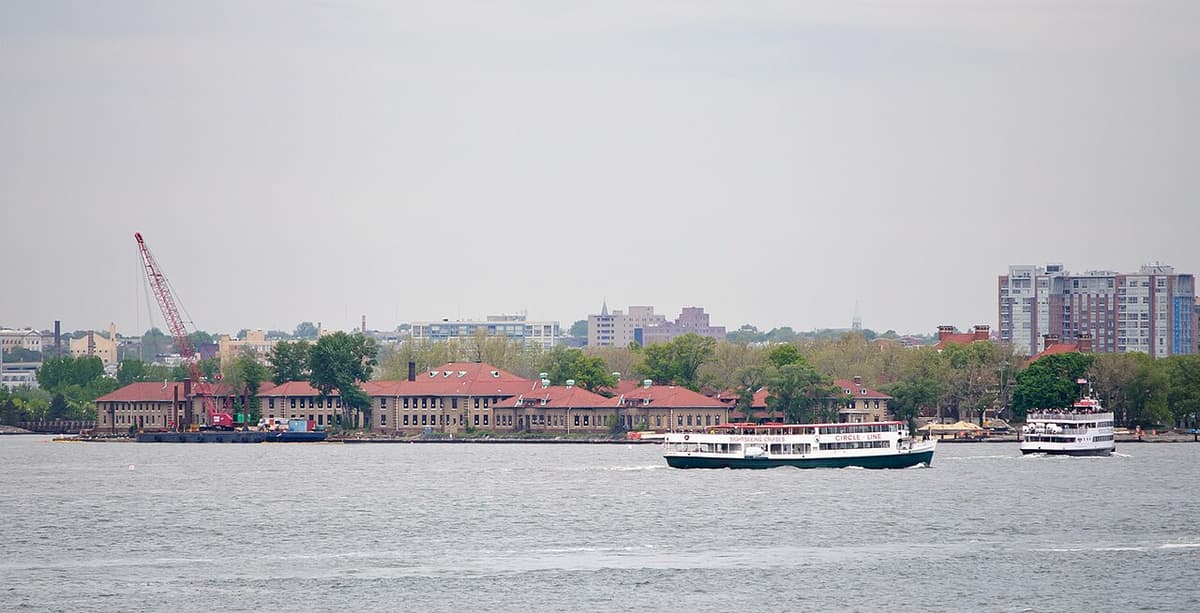
Hundreds of babies were born here, and many travelers who arrived sick never left on the same ship.
A hospital for the people who arrived sick
The Ellis Island Immigrant Hospital operated from 1902 to 1951 under the U.S. Public Health Service. It had two jobs: to treat immigrants who arrived ill, and to treat those with conditions that immigration law prohibited, often stabilizing them before sending them back to their home country.
Public Health Service doctors also ran the inspection line in the main building, so the hospital was the next step for those who did not pass that first look. To see the part of the island that is open to everyone, start with Ellis Island: what to see.
From new islands to a complex of wards
The original wooden station burned in 1897, and the rebuilding plan included creating an artificial island, island 2, to put the hospital south of the main island. According to the sources, the first building went up between 1900 and 1901 and opened in 1902 because of construction delays; island 3 was added later.
The complex grew in phases and came to include a general hospital and a separate contagious disease hospital with independent pavilions. That pavilion layout was a well-regarded hygienic model at the time, meant to limit the spread of infection among patients.
What was treated and what life was like inside
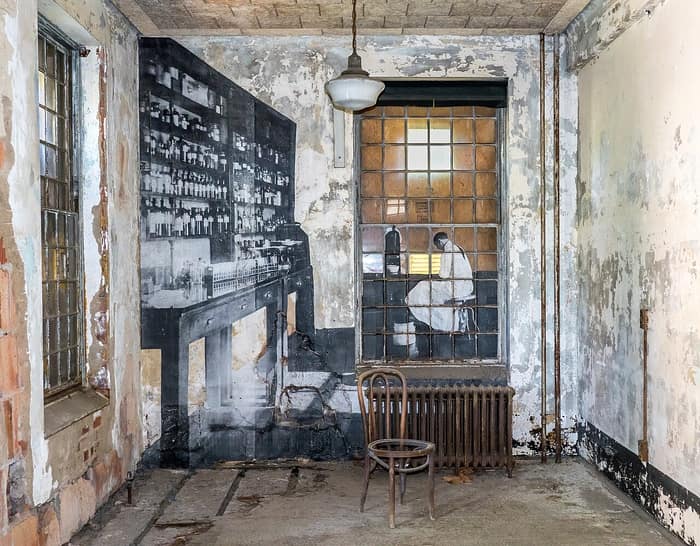
The sources mention measles, tuberculosis, trachoma, scarlet fever, favus and diphtheria, along with tropical diseases brought from around the world. The hospital had X-rays, fluoroscopy and an autoclave for sterilizing mattresses, and its staff included one of the first full-time female physicians in the country.
For many patients everything was new and frightening: unfamiliar machines, undressing in front of strangers, the fear that money sewn into clothing would be taken. That is one reason female doctors were placed on the inspection line. One figure to treat with caution: the sources differ on exact numbers of patients, deaths and births, so we can only say hundreds of thousands were treated, thousands died and hundreds of babies were born.
Closure, abandonment and the hard hat tour
The hospital stopped operating as such in 1951 and the immigration station closed in 1954. Since then the southern half of the island sat empty and unvisited while the main museum building was restored. Today it is managed by a non-profit foundation working to save the buildings.
Since 2014 the complex has opened on a limited basis through guided hard hat tours. Groups are small, you must follow safety rules, and dates, routes and availability change from year to year; tours can even be suspended. Check current information with the foundation and the National Park Service before planning anything.
What to expect and how to prepare
What you see are decayed rooms, corridors with peeling paint and wards where nature has been winning ground. It is a visit about atmosphere and history rather than comfort, and it usually includes information on the architecture and on patients' lives.
Wear closed, comfortable shoes and clothes suited to a building with no climate control, and have your camera ready, knowing that photography rules can vary. If you have mobility or health concerns, review the requirements before booking and do not rely on promises: conditions on site are what they are.
Fitting it into the rest of your trip
This tour is booked separately from the standard ferry ticket and does not replace the museum visit. Plan the day with slack: ferry first, then the museum, and the hard hat tour if you have a place. A full plan including Liberty Island is in One-day itinerary: Statue, Ellis Island and Lower Manhattan.
If family history is what draws you, do not forget the other great reason to come: tracing someone who arrived here, explained in How to find your ancestors who arrived through Ellis Island. For the comparison between the two islands, go to Liberty Island or Ellis Island: which to pick (or both).
Tours that include Ellis Island and special access
There are ferry-only options, guided ones, and some that include reserved access to parts of Ellis Island. Read the fine print on which places you actually enter and which experiences need a separate booking.

Hard Hat Tour of the Abandoned Ellis Island Hospital Complex
Check availability
Statue of Liberty & Ellis Island Tour with Reserved Ferry Entry
Check availability
NYC 9/11 Memorial and Museum Ticket with Tour Options
Check availability
Statue of Liberty and Ellis Island Guided Tour with Ferry
Check availability
Private Statue of Liberty and Ellis Island Tour
Check availability
Private Statue of Liberty and Ellis Island Tour
Check availabilityTour titles and descriptions appear as on the booking platform. No tour guarantees a ticket or a specific experience.
See more tours and activities on GetYourGuide →Frequently asked questions
Can I walk into the Ellis Island hospital on my own?
No. The southern half of the island is closed to the general public and can only be visited on guided hard hat tours run by a non-profit foundation. You must book and follow the safety rules.
When can I do the hard hat tour?
There is no fixed calendar we can promise. Tours have been offered on a limited basis since 2014 and vary by season, group and year. Check current dates and conditions with the foundation and the National Park Service.
Is the tour included in the ferry ticket?
Usually not. It is booked separately, with its own capacity and conditions. Check what each reservation includes before buying and confirm whether you need the ferry and the museum entry separately.
How many people died in the hospital?
The sources do not agree on the exact figure, but they speak of thousands of deaths over half a century of operation and hundreds of babies born there. That is why we avoid giving a specific number.
Is the building safe?
Tours are guided and require hard hats precisely because the buildings are deteriorated and still being restored. Always follow staff instructions and check current conditions and requirements.
Can I photograph the interior?
It is one of the reasons many people want to go, but rules may vary by group and time. Ask when booking and again at the start of the tour about what is allowed.
Is it suitable for children?
That depends on each tour's rules, which may set a minimum age and require closed shoes. The mood is more historical than playful. Review the requirements when you book.
How is it different from visiting the museum?
The museum, on the north side, is designed for the general public. The hospital, in the south, shows a lesser-known part: medical care for immigrants. They are complementary experiences, not interchangeable.
Keep reading

How to find your ancestors who arrived through Ellis Island
Almost nobody had their surname changed on the island: the story told at your family table probably started elsewhere.

Liberty Island or Ellis Island: which to pick (or both)
One island shows you a symbol; the other tells the stories of those who arrived beneath it.

The original torch of the Statue of Liberty
The flame that lit up New York Harbor for almost a century now sits behind glass, seen from below.

How to visit the Statue of Liberty
Most people see her from a distance; few know how a visit to the island really works.
Sources
Facts taken from Wikipedia and the U.S. National Park Service (public domain). Always verify practical information on the official websites.
Photo credits
- InSapphoWeTrust from Los Angeles, California, USA, Wikimedia Commons, CC BY-SA 2.0
- Rhododendrites, Wikimedia Commons, CC BY-SA 4.0
- Carlos Delgado, Wikimedia Commons, CC BY-SA 3.0