An island that is partly New York and partly New Jersey, and almost nobody can say where the line runs.
What Ellis Island was and why it matters
Ellis Island was the busiest immigrant inspection and processing station in the United States. According to the sources, around 12 million people arriving at the Port of New York and New Jersey were processed there between 1892 and 1954, and one estimate suggests a large share of Americans today descend from them.
Since 1965 it has been part of the Statue of Liberty National Monument, so a visit usually pairs with Liberty Island. If you are weighing one against the other, see Liberty Island or Ellis Island: which to pick (or both); for how the whole excursion fits together, read How to visit the Statue of Liberty.
The main building and the Registry Room
The essential stop is the northern half of the island, where the main building stands. It houses the National Immigration Museum, opened after a complete renovation finished in 1990, following years when the buildings sat neglected and were only partly reopened in 1976.
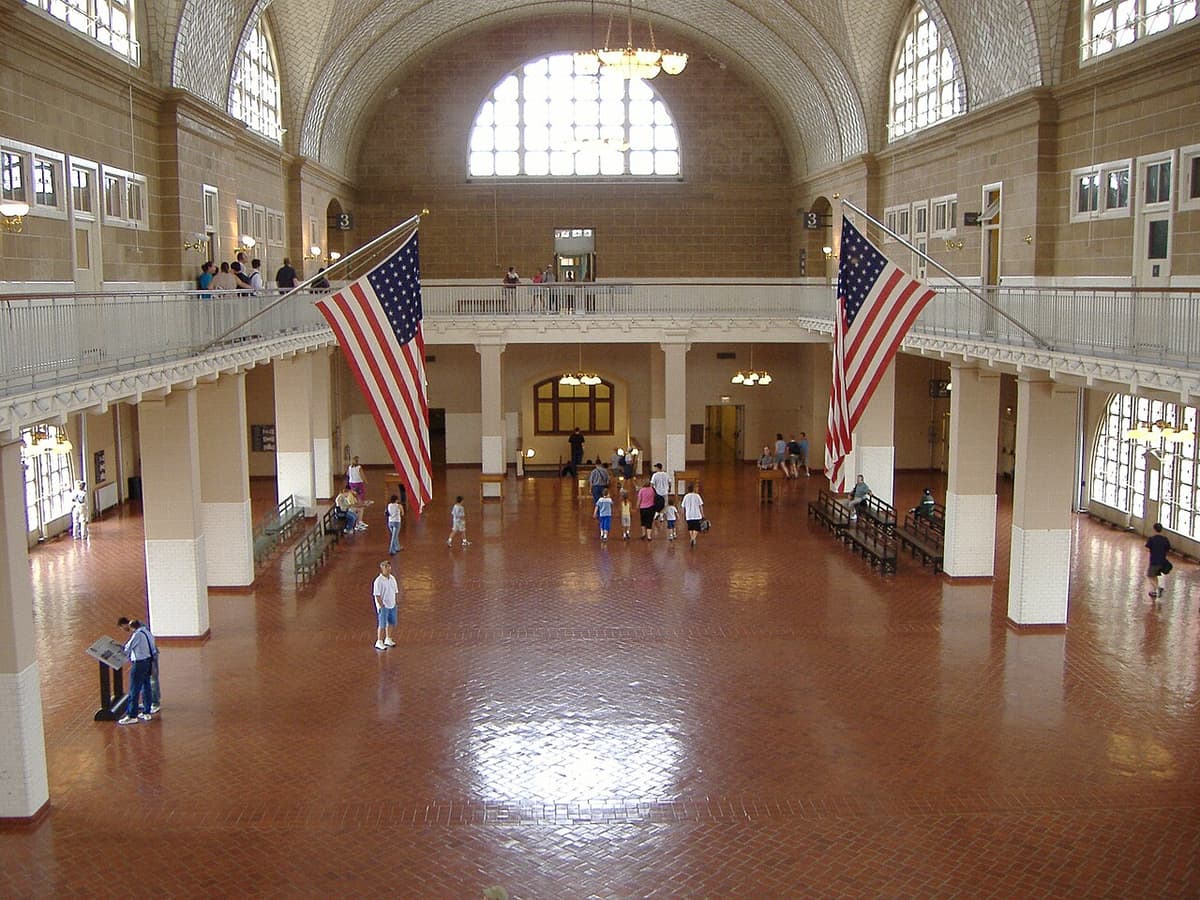
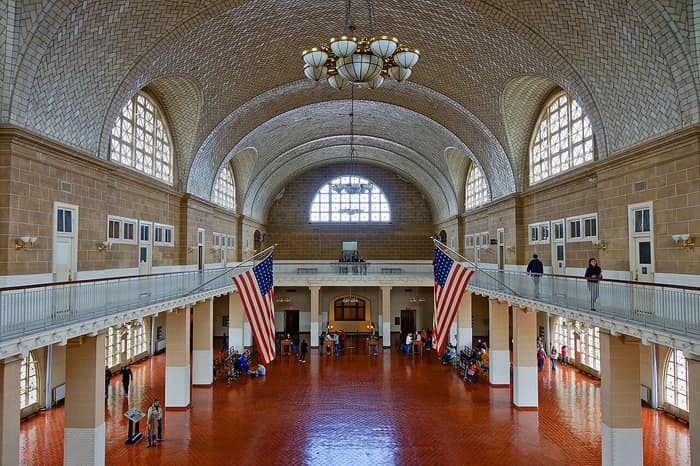
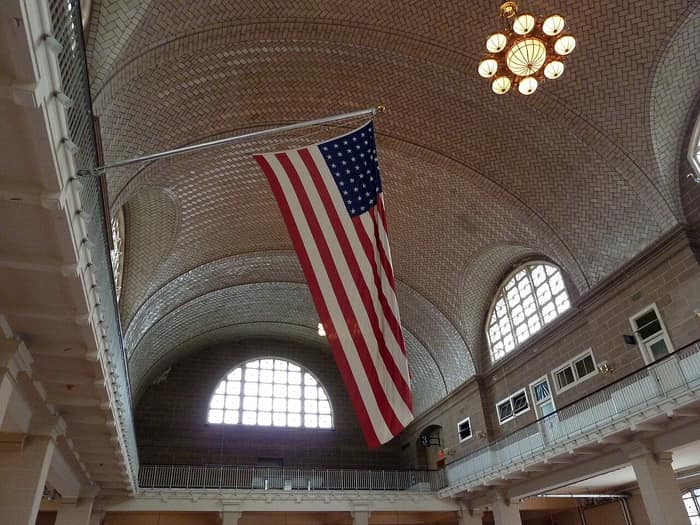
The heart of the route is the Great Hall, or Registry Room, where newcomers waited their turn for medical and legal inspection. Stop in the middle and look up. It is a vast space, quiet compared with what it once was, and it helps you picture the noise of thousands of people speaking dozens of languages.
To grasp what happened at each stage, follow the museum's exhibits in the order they are laid out: landing, inspections, and then the exit toward the ferry that took people on to New York or New Jersey.
The museum, the stories and the Wall of Honor
The exhibits bring together objects, photographs and accounts from people who came through: who they were, why they travelled, how much they dreaded the medical exam, and what happened to the few who were detained or sent back. The sources note that only a small percentage were deported, and that after 1924 the island was used mainly as a detention center.
Outside, on the north side, stands the Wall of Honor, carrying the names of immigrants and their families. It is a good place to pause and, if you are looking for an ancestor, a starting point; how to research one properly is covered in How to find your ancestors who arrived through Ellis Island.
Gallery hours, temporary exhibitions and open areas change over time, so check current information on the official U.S. National Park Service website before you go.
An island made of fill, and an odd split
What you see today is much larger than the original islet. From the late 19th century it was expanded with landfill into two halves of similar size shaped like a C, separated by what used to be a ferry slip. The sources mention that the fill is said to have come partly from ship ballast and excavated earth, though some of those origins are doubted.
There is also a fact worth sharing in the ferry line: in 1998 the U.S. Supreme Court ruled that the natural part of the island, in the north, is an exclave of New York, while the reclaimed land belongs to New Jersey. Some buildings even ended up straddling the state line.
The south side: the hospital you will not see on a regular visit
The southern half of the island, with the old immigrant hospital buildings, is not part of the standard museum visit. It can only be seen through special guided hard hat tours, which do not run all year. If that appeals to you, read The abandoned Ellis Island hospital: hard hat tour before deciding.
It is the lesser-known face of the island: people were not only registered here, they were also treated and isolated. Seeing it adds another dimension to what arriving meant.
Getting there and planning the visit
Ellis Island can only be reached by ferry. Boats leave from Battery Park in lower Manhattan and from Liberty State Park in New Jersey. Entry to the monument itself is free, but the ferry has a cost, and reserved access to the crown or pedestal is separate. Always check prices, schedules and availability on the official National Park Service pages and with the operators.
To decide how much time to set aside, think about how much history you want: someone reading the whole museum needs far longer than someone who only wants the Great Hall and a few photos. A full itinerary combining Liberty Island and lower Manhattan is in One-day itinerary: Statue, Ellis Island and Lower Manhattan.
Arrive early if you can, wear comfortable shoes, and expect security screening before boarding, as at the Statue of Liberty.
Tours to visit Ellis Island and the Statue of Liberty
Some options are just transportation, while others add a guide or reserved access to specific areas. Compare what each includes, how long it lasts and whether it departs from Manhattan or New Jersey before choosing.

Statue of Liberty & Ellis Island Tour with Reserved Ferry Entry
Check availability
Statue of Liberty and Ellis Island Guided Tour with Ferry
Check availability
Private Statue of Liberty and Ellis Island Tour
Check availability
Private Statue of Liberty and Ellis Island Tour
Check availability
Statue of Liberty Tour with Ellis Island and Immigration Museum
Check availability
Hard Hat Tour of the Abandoned Ellis Island Hospital Complex
Check availabilityTour titles and descriptions appear as on the booking platform. No tour guarantees a ticket or a specific experience.
See more tours and activities on GetYourGuide →Frequently asked questions
Can I visit Ellis Island without going to the Statue of Liberty?
That depends on the ticket and the ferry route, which have changed over the years. Usually both stops are combined in one trip. Check the official National Park Service site and the operators to see what each option includes before you buy.
How long do I need for Ellis Island?
It depends on your interest. For the Great Hall and the main exhibits allow a good stretch of time, and a lot more if you want to read everything or watch a film. Think of about half a day across both islands and adjust to what you want to see.
Is Ellis Island free?
Entry to the National Monument is free, but the ferry that takes you there has a cost, and some special experiences are booked separately. Always check current conditions and prices on the official websites before going.
Can I visit the abandoned hospital?
Only on special guided hard hat tours run by a non-profit foundation, and they are not available all year. You cannot go on your own. Check current availability and conditions well in advance.
Is Ellis Island in New York or New Jersey?
Both. A 1998 Supreme Court ruling decided that the small original island belongs to New York, while most of the landfill belongs to New Jersey. The island remains owned by the federal government.
What happened to immigrants who failed inspection?
Most were through within a few hours, but some were held for medical or legal review, and a few were sent back. The sources say the share of deportations was small, around 2 percent by some estimates.
Is it suitable for children or visitors with reduced mobility?
It is a common family visit. If you need ramps, elevators or help on the boat, check the current accessibility services on the National Park Service site and with the operators, since they can change.
Keep reading

How to visit the Statue of Liberty
Most people see her from a distance; few know how a visit to the island really works.

Castle Clinton and Battery Park: the gateway to the Statue
Long before Ellis Island, millions of newcomers first set foot in America on this very spot.

Governors Island: the quiet island off Manhattan
An island that served as a military post for nearly two centuries is now New York's backyard.

What to see near the Statue of Liberty in Lower Manhattan
Five stops on foot that span centuries of New York, from the ferry dock to a bridge opened in 1883.
Sources
Facts taken from Wikipedia and the U.S. National Park Service (public domain). Always verify practical information on the official websites.
Photo credits
- Erebus555 at English Wikipedia, Wikimedia Commons, CC BY-SA 3.0
- Jean-Christophe BENOIST, Wikimedia Commons, CC BY 3.0
- Rob Young from United Kingdom, Wikimedia Commons, CC BY 2.0