The green lady was not born green, and the woman you see from the ferry keeps more than one secret.
She was not always green
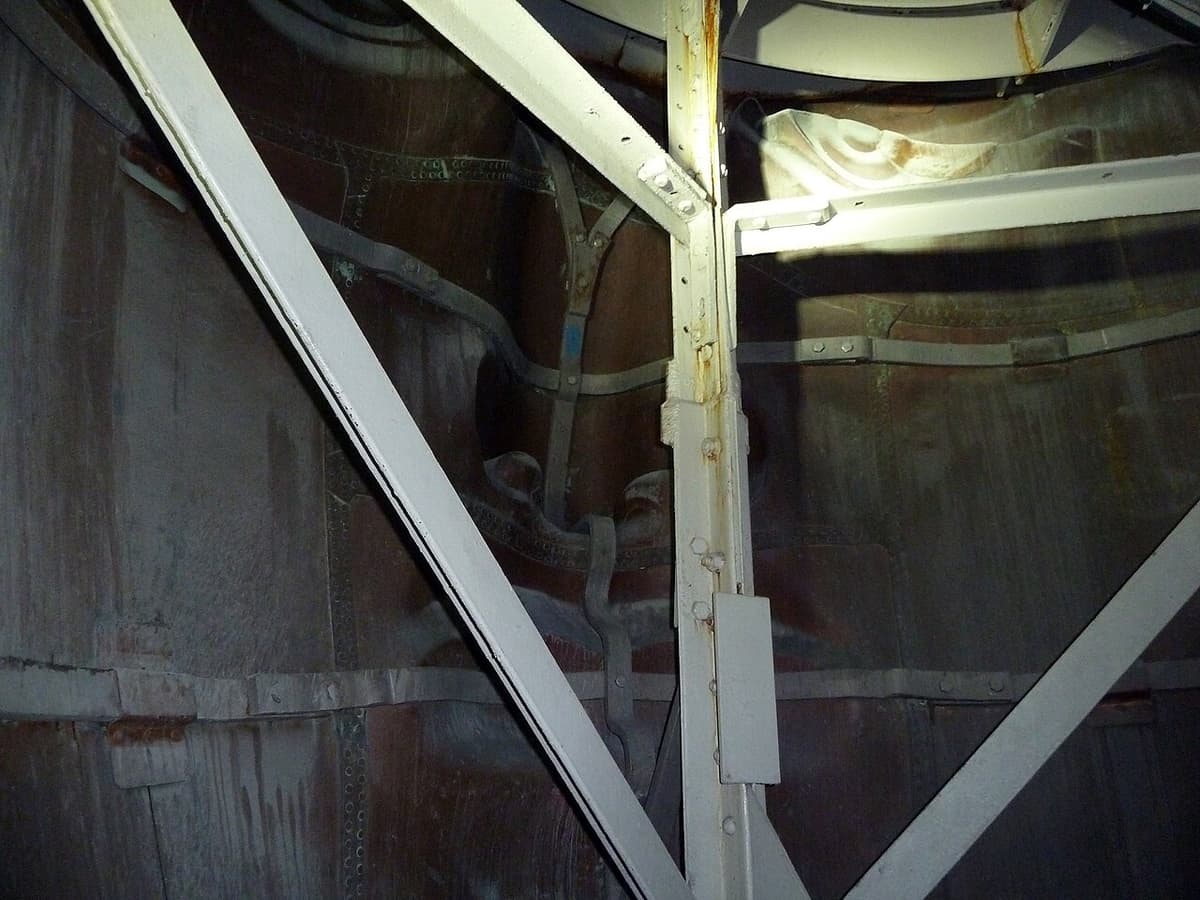
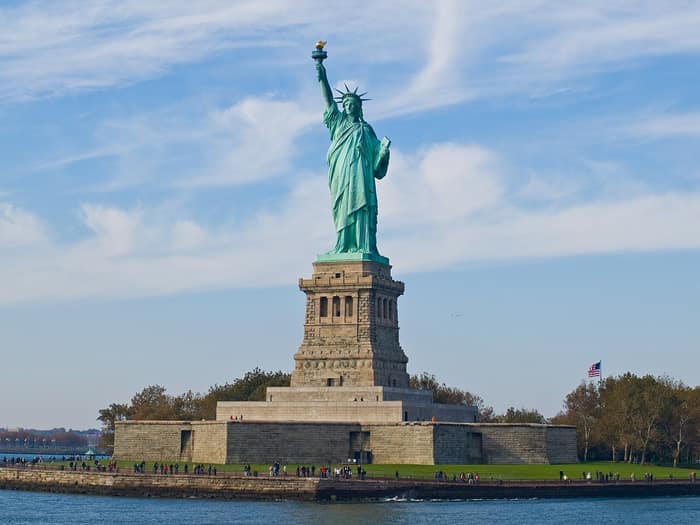
One of the most repeated curiosities is the color. According to one source, the statue arrived the color of copper, and the green she is known for appeared over time. It is the natural effect of copper exposed to the weather, which forms a greenish layer called a patina.
That layer is not paint. So if someone asks why the lady is green, the short answer is aged copper. If you want to see how that metal skin was built, the story is in History of the Statue of Liberty.
Who she really is
She is not a historical person. She is a classical figure in a long robe, inspired by Libertas, the Roman goddess of liberty. She is sometimes confused with other personifications, such as Columbia, long a common symbol of the United States, but the New York statue is tied to Libertas.
The monument's full name, Liberty Enlightening the World, says it all: the light of the torch is part of the message. That is why the torch matters so much, and why it has a page of its own: The original torch of the Statue of Liberty.
Another naming curiosity: in its original language she is La Liberté éclairant le monde. New Yorkers simply call her the Statue of Liberty, and many visitors affectionately say Lady Liberty.
The tablet, the chain, and the rays
In her left hand she carries a tablet inscribed JULY IV MDCCLXXVI, the date of the American Declaration of Independence (July 4, 1776) in Roman numerals. Many visitors look at the torch and miss this detail.
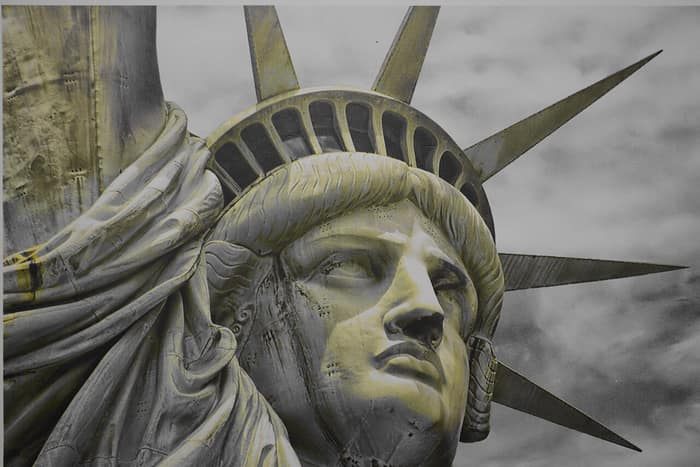
With her left foot she steps on a broken chain and shackle, a nod to the abolition of slavery after the Civil War. And on her head she wears not the usual Phrygian cap that stood for liberty in other works, but a diadem of rays, as one of the sources points out. On the island the best way to see these is slowly; the close-up details are covered in Statue of Liberty pedestal and museum.
If you travel with children, you can turn this into a game: find the tablet, the chain, and the rays. It is a simple way to look closely at a figure many people recognize only by its silhouette.
The face: a question with no closed answer
Whose face is it? Historians have not settled the question. One source lists several hypotheses: that Bartholdi drew on his mother's face, that he used the widow of an inventor as a model, and even a girl on a barricade. None is conclusive.
The careful way to put it is that the face is either a composite or a mystery: the sculptor himself, according to National Geographic as cited in the sources, never confirmed or denied the resemblance to his mother. It is a nice thing to share with your travel companions, because it mixes something you can see with something nobody knows.
Another version that gets cited says Bartholdi remembered a young girl on a barricade holding a torch, during the unrest after Napoleon III's coup. It is a powerful image, though it is not confirmed either.
From Egypt to New York: a lighthouse that never was
Before the Statue of Liberty, Bartholdi proposed a giant lighthouse shaped like a robed woman holding a torch aloft for the entrance to the Suez Canal. His drawings look a great deal like the New York statue. The project was turned down, according to the sources over cost, and Bartholdi insisted that the New York work was original and not a reuse.
Another curious link in the same vein: the statue recalls the Colossus of Rhodes, the ancient sculpture believed to have stood at a harbor entrance and carried a light. The comparison appears in several sources.
Measurements and firsts: what can be said
One source gives the statue a height of about 46 meters, and puts the top of the torch at about 93 meters above mean low water. When finished, it was the largest work of its kind completed up to that time. These are approximate values and depend on how you measure; if you need an exact figure for a project, check the official site.
Another notable mark: its dedication was celebrated with New York's first ticker-tape parade, and UNESCO has listed it as a World Heritage Site since 1984.
And one piece of context: the torch-bearing arm was shown in Philadelphia in 1876 and then stood for years in Madison Square Park in Manhattan, long before the rest of the statue existed. For a while it may have been all New Yorkers saw of the project.
The explosion that wounded her, and common myths
On July 30, 1916, an act of sabotage at the Black Tom munitions depot beside the harbor caused an explosion felt far away. Some fragments reached the statue and damaged the skirt and torch. Since then the public has not been able to climb to the torch. That is why only the crown (in limited numbers) can be visited today, not the flame: Statue of Liberty crown: how to climb it.
Among the usual myths: thinking Eiffel designed the whole statue (his contribution was the internal structure; the figure is Bartholdi's), believing it was paid for with French money alone (France paid for the statue, but the pedestal came from American donations), or imagining you can climb to the torch. For more questions, see Statue of Liberty frequently asked questions.
One more reminder before you go: closures, safety rules, and what visitors may reach change over time, so treat this list as background and check the official National Park Service site for current access.
Guided tours to discover the Statue of Liberty
With a guide it is easier to spot details people miss, like the tablet or the chain. Compare the length, whether you get off on the island, and what each tour covers before choosing.

Statue of Liberty & Ellis Island Tour with Reserved Ferry Entry
Check availability
Statue of Liberty and Ellis Island Guided Tour with Ferry
Check availability
Circle Line: New York City Statue of Liberty Super Express Cruise
Check availability
NYC City Tour: Statue of Liberty, 9/11 Memorial, Wall Street
Check availability
Statue of Liberty and New York City Skyline Sightseeing Cruise
Check availability
Statue of Liberty & NYC Skyline Cruise - Freedom Liberty Tour
Check availabilityTour titles and descriptions appear as on the booking platform. No tour guarantees a ticket or a specific experience.
See more tours and activities on GetYourGuide →Frequently asked questions
Why is the Statue of Liberty green?
Because she is covered in copper, and copper exposed to air and rain forms a greenish layer over the years, called a patina. According to one source, the statue arrived the color of copper and the green appeared later.
Who does the Statue of Liberty represent?
She represents Libertas, the Roman goddess of liberty, shown as a robed woman. She does not portray a specific historical person. Her full name is Liberty Enlightening the World.
What does the tablet she holds say?
It is inscribed JULY IV MDCCLXXVI, which is July 4, 1776 in Roman numerals, the date of the United States Declaration of Independence.
What is at her feet?
With her left foot she steps on a broken chain and shackle, which recall the abolition of slavery after the American Civil War. From a distance they are not always easy to see; the pedestal offers a better view.
Whose face is the statue's face?
There is no closed answer. Several models have been proposed, including the sculptor's mother, but none is conclusive. It is safest to treat them as hypotheses rather than a confirmed fact.
Is it true the statue was damaged by an explosion?
Yes. On July 30, 1916, sabotage at the Black Tom munitions depot caused a huge explosion near Liberty Island. Fragments reached the statue and damaged the skirt and torch.
Can you climb to the torch?
No. Access to the torch has been closed to the public since 1916. You can visit the inside of the crown, in limited numbers, and the pedestal. Conditions change, so check the official website before you go.
Keep reading

Statue of Liberty crown: how to climb it
The crown is the highest point inside the statue you can still reach, and it is not for everyone.

The abandoned Ellis Island hospital: hard hat tour
Hundreds of babies were born here, and many travelers who arrived sick never left on the same ship.

History of the Statue of Liberty
She was meant for the 1876 centennial. She arrived ten years later, and the pedestal almost went unfunded.

Statue of Liberty and New York skyline cruise
From the water, New York looks the way it did to travelers arriving by sea.
Sources
Facts taken from Wikipedia and the U.S. National Park Service (public domain). Always verify practical information on the official websites.
Photo credits
- Rob Young from United Kingdom, Wikimedia Commons, CC BY 2.0
- Danilo Milhome, Wikimedia Commons, CC BY-SA 4.0
- William Warby, Wikimedia Commons, CC BY 2.0