
Under the statue lies a star-shaped fort that hardly anyone notices.
What the pedestal is and what it stands on
The pedestal is the great stone base the statue rests on. It was the United States' job: under the original arrangement France would finance and build the statue, while the Americans would provide the site and the pedestal. Raising that money proved hard, until the publisher Joseph Pulitzer launched a donation drive in his newspaper to get it finished.
What many visitors do not realise is that the pedestal was not built on empty ground. The island, then called Bedloe's Island, already held a granite fortification shaped like an eleven-pointed star, Fort Wood, nicknamed the Star Fort. The statue was assembled on its walls, so walking around the base means treading on part of an old harbor-defense fort.
To see how it all fits together from outside, just walk around the monument: the star shape can be traced in the line of the walls. The story of how the statue arrived in crates from France and was assembled there is told in the history of the Statue of Liberty.
The pedestal viewing area: what you see
With pedestal access you go into the base and out onto an outdoor platform that rings the statue. The sources note that only limited numbers of visitors can reach the rim of the pedestal, so it is not an open-for-all area.
The view works two ways. Up close, the figure towers over you with its green copper only a few metres away and the torch rising above. Out ahead, the harbor opens up: Lower Manhattan's skyline, ferries coming and going, Ellis Island and the New Jersey shore. It is a good spot for photos with the statue in the foreground, which is harder to manage from the ground.
If you want a tighter view and the experience of entering the head, there is also crown access, covered in the Statue of Liberty crown. In practical terms, the pedestal has more capacity and is less physically demanding.

The Statue of Liberty Museum
The museum on Liberty Island opened on May 16, 2019 and focuses on the creation, meaning and history of the statue. The building, about 26,000 square feet, was designed to hold all of the island's daily visitors, something the old museum could not do: it held only about a fifth. It is woven into the parkland around it, so it does not interrupt views of the statue.
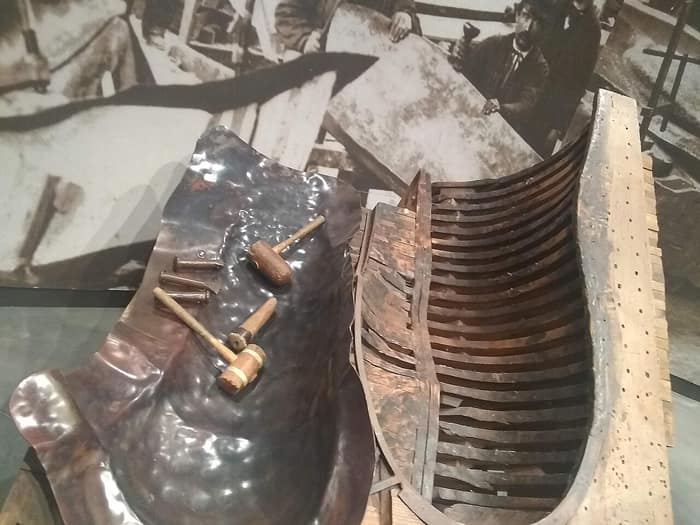
Inside is an exhibition of more than 500 photographs and graphics from more than a hundred sources. Among them are rare images of the statue's construction from the Bartholdi Museum in Colmar, France, and sketches of early pedestal designs held by the Library of Congress. There is also a theater where you can watch an aerial view of the statue.
It is a good place to get context before or after a climb. If you are with children, it doubles as a break under cover and a visual aid; see the Statue of Liberty with kids for planning the day.
The original torch, the star piece
One of the museum's most important pieces is the original torch, which the statue carried from 1886 to 1984. Seeing it up close helps you gauge the real size of the hand that held it, and understand the wear on metal left out in harbor wind and salt air for the better part of a century.
It is no longer up top for a reason: it was replaced by a new one as part of the restoration work. And climbing to the torch is impossible today, because public access has been closed since 1916. If you wonder why, we go into it in the original torch, and there are more striking details in Statue of Liberty facts.
One sensible warning: what is on show and how it is laid out can change over time. Check the official website in case rooms are closed or temporary exhibits are running.
How to get access to the pedestal and museum
Basic ferry access lets you get off at the island and visit the museum. Entering the pedestal usually takes an additional ticket, and in busy seasons you need to reserve it early because places run out. Exact conditions change, so check the National Park Service site and your operator's to see what your particular ticket includes.
Passes can have time slots, and arriving late may cost you your turn. The earlier you board, the more margin you have. For the full picture of arriving and boarding, see how to visit the Statue of Liberty, and to avoid waits, how to avoid the lines.
One odd restriction: since the museum opened, independent commercial tour guides have been banned from certain parts of the island, including part of the museum. That is one more reason to look closely at what a guided visit includes before you book.
Splitting your time and what else to see nearby
If you do both pedestal and museum, expect a good part of the morning. An efficient order is to do the pedestal at your time slot and leave the museum for last, when the sun is strong or it turns cold. Take it slowly and the island offers more than it seems.
Before heading back, walk the perimeter to see the statue from different angles; the views change a lot from side to side. If you then continue to the monument's other island, the guide to Ellis Island: what to see will help you prioritise.
And if time runs short or your dates do not allow a pedestal booking, you do not lose the experience: the park, the museum and the view of the statue from its base already make the visit worthwhile.
Tours with pedestal and island access
Some tours include reserved pedestal access, while others cover only the ferry and a walk around Liberty Island. Compare duration, whether a guide is included and which access is actually confirmed before you decide.

Statue of Liberty Tour with Ellis Island and Immigration Museum
Check availability
Statue of Liberty Express: Museum, Statue Grounds, Battery Park
Check availability
Statue of Liberty & Ellis Island Tour with Reserved Ferry Entry
Check availability
Statue of Liberty and Ellis Island Guided Tour with Ferry
Check availability
Circle Line: New York City Statue of Liberty Super Express Cruise
Check availability
NYC City Tour: Statue of Liberty, 9/11 Memorial, Wall Street
Check availabilityTour titles and descriptions appear as on the booking platform. No tour guarantees a ticket or a specific experience.
See more tours and activities on GetYourGuide →Frequently asked questions
What is the difference between the pedestal and the museum?
The pedestal is the statue's base, with an outdoor viewing area that a limited number of visitors can reach. The museum is a separate building on the island with exhibits about the statue's creation and history, plus the original torch.
Do I need a special ticket for the pedestal?
Usually yes: on top of the ferry, an additional access with limited places is normally required. Conditions change, so check the official National Park Service site and your operator before booking.
When did the Statue of Liberty Museum open?
The museum on Liberty Island opened on May 16, 2019. It was designed to hold all of the island's daily visitors, whereas the earlier museum could take only a small share.
Where is the original torch?
In the museum on Liberty Island. It is the torch the statue carried from 1886 to 1984. The current one is a newer piece. Check the official website for any changes to what is displayed.
What is Fort Wood?
It is the old granite fort, shaped like an eleven-pointed star, on whose walls the pedestal stands. It occupied the island before the statue and helped defend the harbor. Today it forms part of the monument's base.
Can I visit the museum without going up the pedestal?
Yes. With basic ferry access you can land, walk the grounds and visit the museum. The pedestal needs additional access, which is worth checking and booking ahead.
How much time should I allow?
Allow a good part of a morning or afternoon for pedestal and museum, plus ferry and security time. If you add Ellis Island, plan on a full day.
Keep reading

Castle Clinton and Battery Park: the gateway to the Statue
Long before Ellis Island, millions of newcomers first set foot in America on this very spot.

Governors Island: the quiet island off Manhattan
An island that served as a military post for nearly two centuries is now New York's backyard.

What to see near the Statue of Liberty in Lower Manhattan
Five stops on foot that span centuries of New York, from the ferry dock to a bridge opened in 1883.

Ferries and boats to the Statue of Liberty: which to choose
Two boats can pass the Statue, and only one lets you step off.
Sources
Facts taken from Wikipedia and the U.S. National Park Service (public domain). Always verify practical information on the official websites.
Photo credits
- Epicgenius, Wikimedia Commons, CC BY-SA 4.0
- Epicgenius, Wikimedia Commons, CC BY-SA 4.0
- Epicgenius, Wikimedia Commons, CC BY-SA 4.0